
Pheromone Maxxing: The Doctor-Debunked Trend Convincing Gen Z Men To Stop Showering
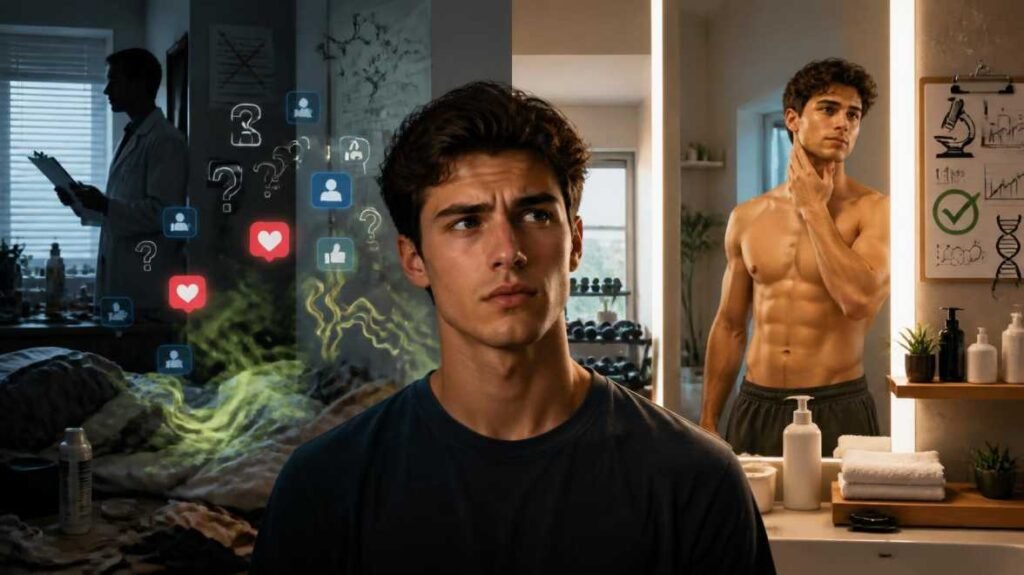
Every so often, the internet finds a new way to convince young men that basic hygiene is somehow holding them back. This time it’s pheromone maxxing — a trend built on the idea that your natural body odor might be a secret weapon, if only deodorant and soap would stop getting in the way. One doctor recently decided he’d had enough of watching it spread and said so, bluntly, to over two million people.
What Is Pheromone Maxxing, Exactly?
The basic pitch is simple, if a little absurd once you say it out loud: skip showering for days at a time, avoid deodorant, and let your natural scent — supposedly loaded with pheromones — do the work of attracting women instead of cologne or good hygiene. Some corners of the trend go further, with people online claiming that drinking your own urine helps preserve or boost hormone and pheromone levels, making you even more “biologically irresistible.” It’s exactly as unpleasant as it sounds, and exactly as unsupported by evidence.
Pediatric allergist Dr Zachary Rubin, who has 2.3 million followers on TikTok, addressed it directly in a recent video, calling out the practice by name and telling his audience there’s no scientific basis behind it at all. He didn’t mince words, either, warning that going days without bathing to try to attract women would likely have the opposite effect entirely.
The Science Being Misused To Justify It
Like most viral wellness trends, this one borrows a real piece of research and stretches it well past what it actually shows. A 2001 study found that a compound linked to the opposite sex triggered a distinct response in the hypothalamus — a small but genuinely interesting finding about brain activity. What it didn’t show is that skipping showers makes anyone more attractive, or that human pheromones work anything like the chemical signals seen in insects and some other animals, where the science is far better established. That gap between “a lab measured a brain response” and “stop washing your clothes” is where the trend completely loses the plot, but it’s exactly the kind of leap that spreads fast once it gets simplified into a TikTok caption.
A Doctor’s Blunt Response To The Trend
Rubin didn’t stop at debunking the science. He used his platform to lay out what he described as actual, useful advice for young men trying to build confidence around dating — starting with the basics most people already know deep down. Exercise regularly. Sleep properly. Maintain real hygiene, showering included. Wear clothes that fit. Build a life around hobbies and interests that are genuinely fulfilling, since that’s what tends to naturally lead to social circles, friendships, and eventually the kind of situations where meeting someone becomes possible in the first place.
He was also fairly direct about the mindset underneath the trend, pointing out that treating women like a puzzle to be solved with the right scent or trick is the wrong framework entirely. His suggestion was closer to what most relationship counselors would say anyway: lead with kindness, curiosity, and genuine interest in another person, and accept that rejection is a normal part of that process rather than a bug to be engineered around.
Where Pheromone Maxxing Fits Into A Bigger Pattern
It’s worth zooming out here, because this isn’t an isolated trend. This habit is rooted in the broader looksmaxxing subculture, where young men attempt to systematically optimize their physical attractiveness — jawlines, symmetry, posture, and now apparently scent — often through methods with little to no scientific backing. Some versions of this world stay relatively harmless, like skincare routines or gym programs. Others tip into genuinely risky territory; a related practice sometimes called “bonesmashing,” which involves deliberately striking areas of the face to supposedly reshape bone structure, has drawn its own separate wave of medical warnings.
Researchers who study this space have pointed out that looksmaxxing trends tend to cluster around a specific mindset — a sense among some young men that they lack control over their romantic lives, paired with a belief that appearance, rather than behavior or connection, is the lever most worth pulling. It fits neatly into that pattern: a shortcut that requires no actual social risk, just an unpleasant physical routine that supposedly does the work for you.
There’s also a genuinely funny irony sitting underneath all of it. While a small, loud corner of the internet is telling young men to stop showering, the wider Gen Z demographic is doing the exact opposite — teen boys alone increased fragrance spending by 26% year-over-year, according to a recent Piper Sandler teen survey, suggesting most people in this age group still care quite a lot about smelling good rather than skipping it entirely.
What Actually Works, According To The Same Doctor
Rubin’s closing point is probably the most useful part of the whole exchange, mostly because it isn’t complicated. There’s no shortcut hiding in unwashed clothes or altered biology. Taking care of yourself physically, maintaining real friendships, treating people with basic respect, and being able to handle rejection without spiraling are, in his words, simply “much more likely to lead a happier and healthier life” than anything a scent-based trend can promise. It’s not a glamorous answer, and it definitely doesn’t fit into a fifteen-second video as neatly as “stop showering” does. But according to the person actually qualified to weigh in, it’s the version that holds up.
For anyone who’s stumbled across this corner of the internet and wondered whether there’s something to it: there isn’t. Pheromone maxxing is one more entry in a long list of trends promising an easy fix for something that’s never really had one — and the doctor calling it out clearly doesn’t think it deserves the attention it’s getting.







1 thought on “Pheromone Maxxing: The Doctor-Debunked Trend Convincing Gen Z Men To Stop Showering”