
Tom Blyth Makes Broadway Debut in ‘A Few Good Men’ Revival
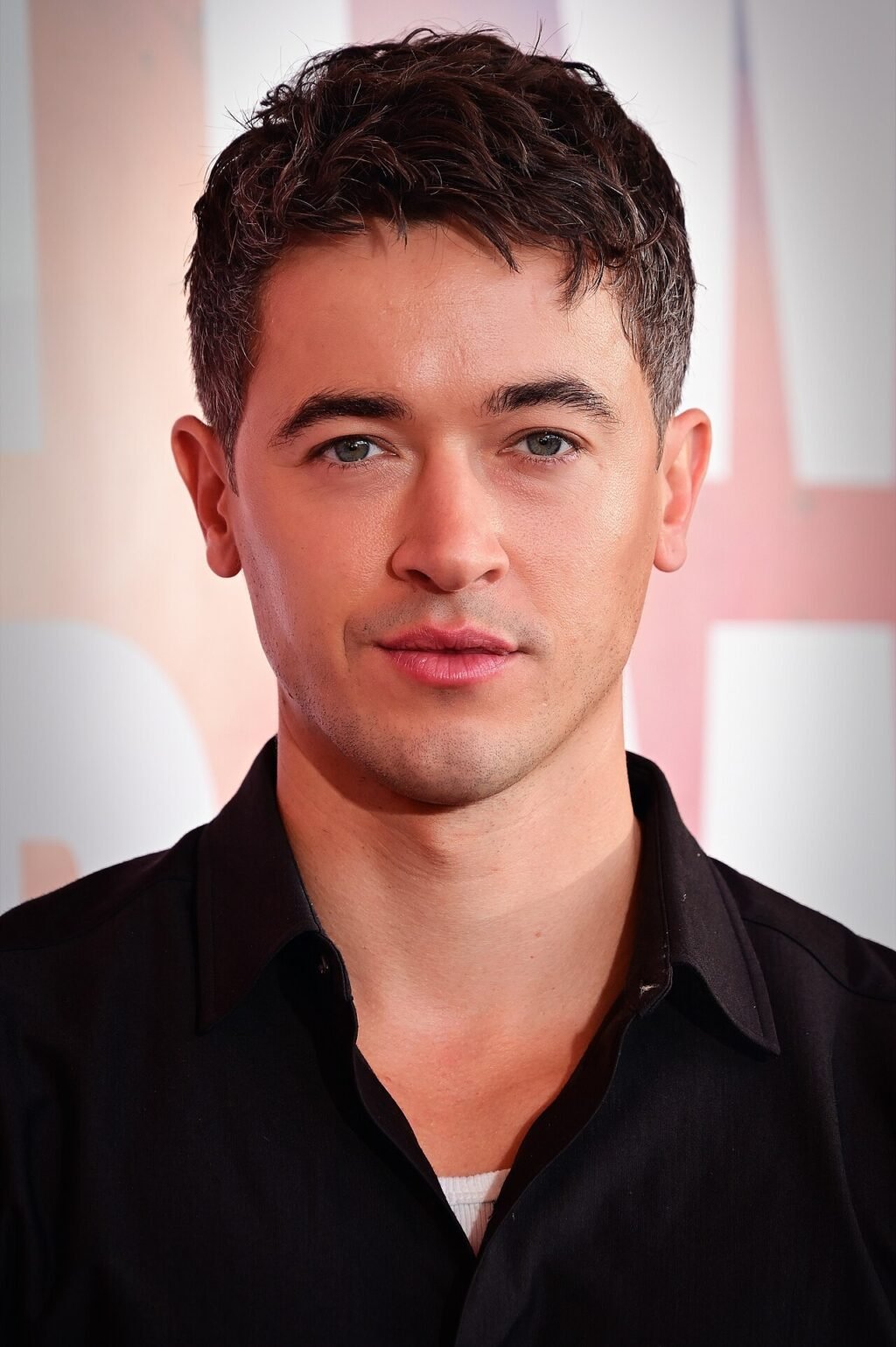
Photo: Philip Romano via Wikimedia Commons (CC BY-SA 4.0)
There’s a moment — somewhere between the house lights going down and the first real wave of applause — when a screen actor officially becomes a Broadway actor. For Tom Blyth, that moment came Thursday night (October 8). The 31-year-old, who most people know as the young Coriolanus Snow from The Hunger Games: The Ballad of Songbirds & Snakes, walked onto the stage of Lincoln Center Theater’s Vivian Beaumont Theater for the first preview of A Few Good Men and took his first bow as a Broadway leading man.
Plenty of actors make Broadway debuts. Most of them pick something safe. A feel-good musical revival. A two-hander with a beloved legend. Something where the audience loves them before they’ve done anything hard. Blyth did the opposite. He walked into a play that hasn’t been on Broadway in nearly forty years and grabbed the role that made Tom Cruise a movie star. That’s either madness or confidence. Honestly? Probably both.
He’s playing LTJG Daniel Kaffee — the fast-talking military lawyer stuck defending two young Marines accused of murder at Guantanamo Bay. It’s the first-ever Broadway revival of Aaron Sorkin’s landmark play, a 13-week limited engagement with its official opening night set for Thursday, October 29. And if you know anything about this play’s history, you know what’s hanging over this whole production.
Yeah, About That Shadow
Let’s just say it: when people hear A Few Good Men, they hear Jack Nicholson screaming “You can’t handle the truth!” That’s the 1992 Rob Reiner movie — Cruise as Kaffee, Nicholson as the terrifying Colonel Jessep, Demi Moore as Galloway. It’s one of the great courtroom movies ever made, and its lines have been quoted, parodied, and memed into the dirt for more than three decades.
But the stage version got there first. Sorkin wrote it in the late ’80s, and it opened on Broadway in November 1989 at the Music Box Theatre, where it ran 497 performances. Tom Hulce — yeah, Mozart from Amadeus — originated Kaffee on stage, with Stephen Lang playing Jessep opposite him. It was a hit. The movie made it immortal. And then Broadway just… never did it again. Until now.
So this revival is the first time in 37 years that Broadway audiences get Sorkin’s courtroom drama the way it was meant to be experienced: live, in the room, the silences doing half the work. Which also means Blyth has to play a part everybody thinks they already know, in front of crowds where half the people saw the movie on opening weekend and never once saw the play. No pressure.
Here’s the thing, though. That’s exactly why this casting is interesting. A lesser actor would have picked a safer debut. Blyth picked the role that invites the Cruise comparison from the moment the curtain goes up, in a play that lives or dies on verbal sparring. That tells you how seriously he’s taking this. You don’t walk into that buzzsaw unless you believe you can handle it.
The Company He’s Keeping
He’s not doing it alone, thank God. Opposite him, three-time Emmy winner Bradley Whitford is playing LtCol Nathan R. Jessep — the part Stephen Lang created on stage and Nicholson turned into a cultural landmark on screen. Whitford is Sorkin royalty, full stop. Seven seasons as Josh Lyman on The West Wing, then Studio 60 on the Sunset Strip after that. The man delivered Sorkin’s fastest dialogue on television for years. Now he gets Sorkin’s most menacing monologue on stage. If that doesn’t give you chills a little, I don’t know what to tell you.
And playing Lt. Commander JoAnne Galloway — the sharp attorney who blows up Kaffee’s entire defense strategy — is Outer Critics Circle winner Krysta Rodriguez. If you’re a theater person, you’ve been waiting for her to get a role this big. In the Heights, Spring Awakening, The Addams Family on Broadway, plus a stack of great TV work. Galloway is the play’s conscience, the character who won’t let Kaffee coast, and Rodriguez has exactly the steel and the wit the part needs.
Directing all of this is Tony winner Michael Arden, whose staging of Parade was one of the most talked-about revivals in years. Arden’s whole thing is taking material everybody thinks they know and making it feel dangerous again — finding the raw nerve underneath the familiar text. With a play this quoted-to-death, that’s exactly the instinct this revival needed. Rounding out the company: Stephanie Berry, Nick Blaemire, Michael Braugher, Christopher Gurr, Billy Eugene Jones, Collin Kelly-Sordelet, Shunté Lofton, Michael Oberholtzer, Lavel Schley, Thom Sesma, Daniel Velez, and John Zdrojeski, plus a full ensemble playing the Marines and military personnel packing out that courtroom.
A Bartender, His Sister, and an Accidental Classic
Part of what makes this revival feel like an event — and not just another well-cast limited run — is the story behind the play. It’s almost too good to be true. Sorkin wrote A Few Good Men in the late 1980s while bartending at Broadway’s Palace Theatre. Picture it: a struggling young writer pouring drinks a few blocks from the marquees, and the play that would change his life growing out of conversations with his sister Deborah, who’d studied law at the University of Virginia and served in the Navy’s Judge Advocate General’s Corps. She had the stories. He had the ears. Broadway got a classic.
The 1989 premiere hit at a moment when the American courtroom drama was having one of its golden ages, and Sorkin’s version cut through because it wasn’t really about procedure. It was about conscience. About loyalty. About what obedience costs. The play asks whether following orders is ever an excuse, and whether a system built on secrecy can survive one person demanding the truth. Not exactly a question with an expiration date. If anything, it hits harder now than it did in 1989 — which is presumably why Lincoln Center Theater built its 2026-2027 season around it.
The 1992 film, directed by Reiner, pulled in over $240 million worldwide and scored four Oscar nominations, including Best Picture. Nicholson got a nomination and a permanent spot in the cultural vocabulary. But here’s what the movie can’t do: the stage version is leaner, meaner, more claustrophobic. The courtroom closes in. The witnesses are ten feet away. There is nowhere for a weak performance to hide. For a screen star making his stage debut? That’s either a trap or a triumph. Blyth’s betting on triumph.
How Blyth Got Here
Worth remembering: this guy didn’t arrive as stunt casting. He’s not an influencer with a famous last name. Tom Blyth is a Juilliard-trained actor who did the unglamorous years before anyone knew who he was.
Then November 2023 happened. The Hunger Games: The Ballad of Songbirds & Snakes — the franchise prequel — put him on the map as the young Coriolanus Snow opposite Rachel Zegler’s Lucy Gray Baird. It was a brutal assignment, honestly. Play the teenage version of one of pop culture’s great villains. Make him charming enough that the audience almost roots for him. Let the rot seep through, bit by bit. Blyth nailed it, anchoring a $337 million global hit and proving he could carry a major studio tentpole on charisma and menace in equal measure.
Since then he’s been building the kind of career that says he’s thinking in decades, not quarters. He carried two seasons of MGM+’s Billy the Kid as the title character — all coiled intensity and wounded charm. He led the romantic drama People We Meet on Vacation, showing a lighter side his Snow performance had only hinted at. He fronted Burberry’s High Summer campaign with Simone Ashley, because obviously the fashion world noticed. And through all of it, he’s kept one foot in the serious-actor camp. The kind of performer who treats a Broadway stage like the next mountain, not a victory lap.
That Juilliard training matters here, by the way. Sorkin dialogue is famously unforgiving. The rhythms are musical, the speeches run long, and the jokes have to land like the character just thought of them. Actors talk about Sorkin the way musicians talk about Sondheim — you either have the chops or the whole house knows by intermission. Blyth’s stage training, plus the discipline of carrying Billy the Kid through all those long dialogue-heavy scenes, suggests he didn’t walk into that first preview cold.
The Road to Opening Night
Thursday was just the first preview. The show spends the next three weeks in previews — tightening, tuning, finding its rhythm — before the official opening on Thursday, October 29. Then it’s a 13-week sprint, closing Sunday, January 10, 2027. Limited runs are Broadway’s pressure cooker. No time to coast. No time for a performance to go stale. Every night carries the charge of knowing it’s almost over.
The timing’s no accident. A late-October opening drops this thing right into awards-season territory, and a Sorkin revival with this cast will be on every Tony watcher’s list from day one. Lincoln Center Theater has a habit of turning its limited engagements into the season’s defining events, and the math here is pretty irresistible: a beloved text, a beloved writer, and a leading man at the exact moment his star is peaking.
And for Blyth, the stakes go beyond one season. Screen actors who prove they can hold a stage eight shows a week enter a different tier of the business. The film offers get weirder and better. The directors get more ambitious. The career gets longer. If his Kaffee lands the way this casting suggests it will, this debut won’t be a footnote in his bio. It’ll be the chapter everything after gets measured against.
There’s a nice symmetry to it, too. The actor who got famous playing a young man learning to wield power is now playing a young man learning to confront it. Coriolanus Snow learned to bury the truth. Daniel Kaffee learns to dig it up. Thursday night at the Vivian Beaumont, Tom Blyth took his first bow as a Broadway actor. If the next thirteen weeks go anything like the first preview, it won’t be his last.
Source: Just Jared