Hugh Grant Rejected $750K Per Episode to Replace Charlie Sheen on Two and a Half Men

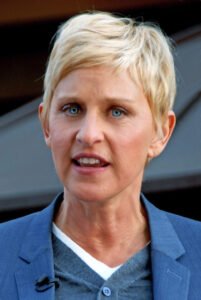
Photo: ManoSolo13241324 via Wikimedia Commons (CC0)
Imagine being offered three-quarters of a million dollars for four days of work, and walking out of the room.
That’s essentially what happened when Hugh Grant was courted to replace Charlie Sheen on Two and a Half Men — a chapter of television history that sat mostly under wraps for fifteen years, and which is now spilling out in delicious detail thanks to Chuck Lorre‘s new memoir.
Lorre, the sitcom king behind Two and a Half Men, The Big Bang Theory, Mom, and Young Sheldon, pulls back the curtain in Sitcom: A Memoir, out Tuesday, October 13. In an excerpt published by Vanity Fair — and in a fresh interview with E! News — he lays out exactly how close the bumbling-romantic-comedy legend came to leading America’s highest-rated sitcom. Closer than anyone knew.
The Offer Was Staggering, Even by 2011 Standards
After Sheen’s very public, very tabloid-fueled implosion in 2011, the show faced an existential question: could Two and a Half Men survive without Charlie Harper? Then-CBS chief Les Moonves made his position clear to Lorre — the money train was going to keep rolling, with or without Sheen. And Sheen had been pulling in roughly $1.25 million an episode, making him the highest-paid actor on television at the time.
So when Lorre and co-creator Lee Aronsohn sat down with Hugh Grant, they weren’t messing around. CBS and Warner Bros. put $750,000 an episode on the table, plus a four-day workweek. Think about that for a second. In 2011, that was an astronomical sum — especially for a movie star taking his first real leap into television, something that simply wasn’t fashionable back then. Grant had never headlined a series. The prestige-TV boom was still years away. For an actor to even consider a sitcom was treated like a career demotion.
But the writers were serious. Lorre and Aronsohn had several meetings with Grant and actually started building something around him. Not Charlie Harper 2.0 — a new character entirely, written to Grant’s strengths. As Lorre put it, they drafted scenes for “very much like a Hugh Grant type of character.” You know exactly what that means: the stammering, self-deprecating, impossibly charming Englishman who somehow always ends up with the girl despite himself. It’s a role Grant could have played in his sleep. And honestly? It might have been great.
Stage Fright Killed the Deal
So what went wrong? It wasn’t the money. It wasn’t the character. It was the audience.
Grant, it turns out, was terrified of performing in front of a live studio audience. For a film actor used to dozens of takes, resets, and quiet sets, the idea of doing comedy in real time in front of hundreds of strangers — with no safety net — was a bridge too far.
Lorre, desperate not to lose him, did something he openly jokes about having no excuse for: he offered to get rid of the audience entirely and just use canned laughter. Let that sink in. One of the most successful comedy producers in television history volunteered to kill the live-audience format — the lifeblood of the multi-camera sitcom — to land one actor. “Clearly I have no moral compass,” Lorre wrote in the book, winking at his own desperation.
And it still wasn’t enough. Grant, pen in hand and contract in front of him, simply bailed. Lorre was told the actor abruptly left the room and became “unreachable.” Eventually a representative called the producers and delivered the verdict: Mr. Grant doesn’t want to do this.
“When it came time to sign a contract and proceed, he bailed,” Lorre told E! News. “I’ve never spoken with him since that time. Just some agent or manager called and said, ‘Mr. Grant doesn’t want to do this.'”
Fifteen years. They never spoke again. Imagine ghosting someone after nearly taking $750,000 an episode from them. Only Hugh Grant could pull that off and still be adored by everyone.
Why 2011 Was Such a Mess
To understand how desperate things were, you have to remember what Two and a Half Men looked like in early 2011. Sheen’s personal life had become a slow-motion public car crash — the interviews, the catchphrases, the “tiger blood” and “winning” mania. Behind the scenes, Lorre says the cast and crew worked in a constant state of anxiety, never knowing what would happen next.
When production shut down, Lorre says he proposed filming two more episodes, then taking a three-month hiatus so Sheen could get help. Sheen pushed back and insisted on shooting four more. The situation deteriorated fast, and in March 2011, Warner Bros. Television fired its biggest star. Charlie Harper was killed off-screen — hit by a subway train, in classic Lorre fashion — and the show had to reinvent itself or die.
Sheen, now 61, offered his own perspective in The Book of Sheen, his memoir published in September 2025, attributing his behavior at the time to a testosterone cream he was using. The bad blood ran deep for years — Sheen even sued Lorre for $100 million in 2011, though the case was settled privately. But here’s the lovely part: the two men eventually found their way back. Lorre cast Sheen as an exaggerated version of himself in the series Bookie, on the condition that Sheen stayed sober, and when they crossed paths again, Lorre says Sheen was gracious and grateful. No rehashing the old drama. “It was just over,” as he puts it.
Enter Ashton Kutcher
After Grant walked, Lorre genuinely thought the sitcom was finished. Then Moonves had an idea: Ashton Kutcher.
Lorre was skeptical. His concern was pretty reasonable — Kutcher felt too young to play the lead opposite Jon Cryer as the show’s new centerpiece. “I think he’s too young to play the second lead, or really the first lead opposite Jon Cryer,” Lorre recalled telling Moonves. Moonves’s response: meet with him. And when Les Moonves told you to do something in 2011, you did it. “This was not a man I like to pick fights with,” Lorre admitted.
So he met with Kutcher. And Kutcher won him over.
The former That ’70s Show star joined Two and a Half Men in season nine as Walden Schmidt, a heartbroken internet billionaire — a character deliberately built to be the anti-Charlie Harper. Where Charlie was a cynical hedonist, Walden was a lovable, lonely tech millionaire. It worked. The show ran four more seasons, ending in 2015 after a twelve-season run.
And the payday? Lorre writes that Kutcher pocketed a whopping $63 million across his 84-episode run. Meanwhile, Jon Cryer — the show’s constant through all the chaos — won his second Emmy. “Winning!” Lorre writes, borrowing Sheen’s infamous catchphrase with the kind of cheek only he can get away with.
Would it have worked with Grant instead? We’ll never know. But consider the sliding-doors nature of it: one actor’s stage fright reshaped an entire sitcom era. Kutcher might never have gotten that career-defining paycheck. Cryer’s second Emmy might never have happened. And Grant — who went on to some of the best work of his career with Florence Foster Jenkins, Paddington 2, A Very English Scandal, and The Undoing — probably doesn’t regret a thing. That’s the thing about Hugh Grant: he’s made a career out of being charmingly reluctant, and turning down $750,000 an episode is possibly the most Hugh Grant thing anyone has ever done.
The Memoir Everyone Will Be Reading
Lorre’s Sitcom: A Memoir arrives October 13 from Dey Street Books, and by all accounts it’s a tell-all in the best sense. Beyond the Two and a Half Men drama, the book covers his career behind The Big Bang Theory, Mom, and Young Sheldon — plus his failed marriages, his own struggles with addiction, and those famous end-of-episode vanity cards where he’d drop cryptic personal essays after the credits. Kirkus Reviews praised its honesty, noting that Lorre leans hard into his failures and isn’t afraid to name names.
Between Lorre’s book and Sheen’s memoir landing within a year of each other, the definitive story of television’s messiest breakup is finally being told by both sides. And honestly? It’s better than the sitcom.
Source: Just Jared