
Connie Britton Plays a Mom Her Own Son Doesn’t Recognize in Hulu’s Creepy New Mystery ‘Phony’
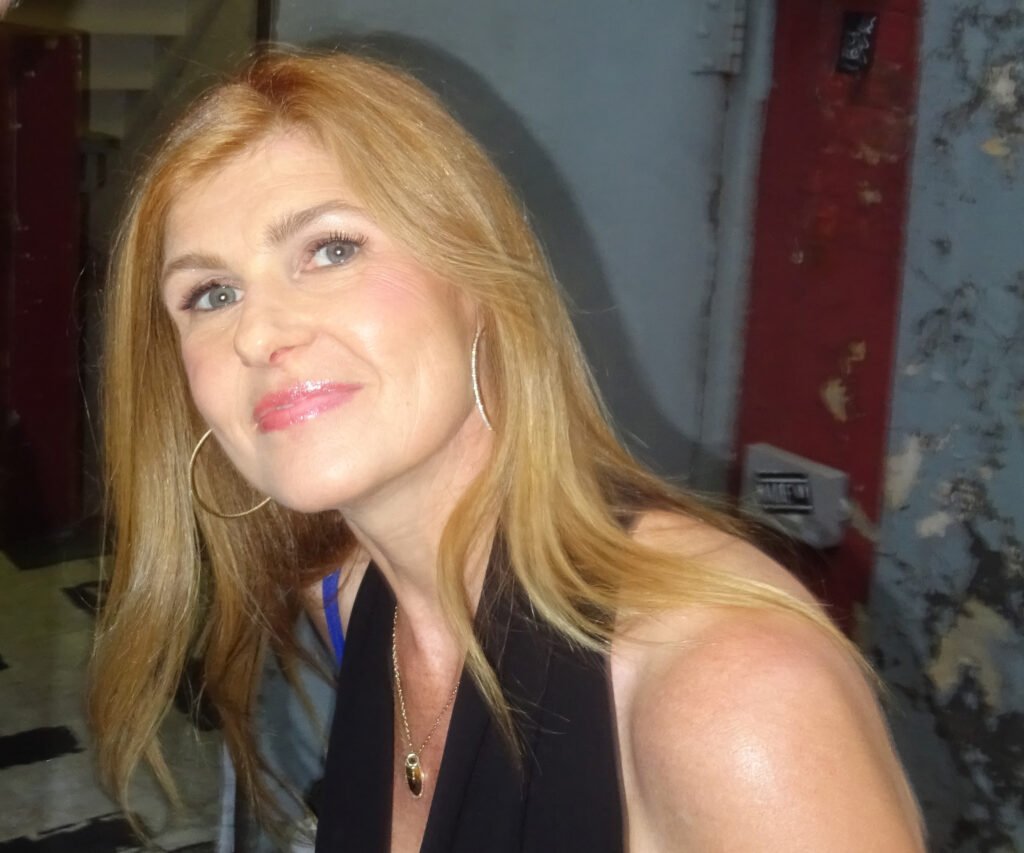
Photo: greg2600 via Wikimedia Commons (CC BY-SA 2.0)
There’s a special kind of dread that only a teenager can feel — the creeping sense that the adults in charge don’t quite add up. Hulu’s new series Phony takes that feeling, cranks it all the way up, and hands it to Connie Britton, who plays a mother her own son no longer believes is real.
Britton, 59, stars in the coming-of-age mystery alongside fellow The White Lotus alum Sam Nivola, who plays her teenage son. The first two episodes dropped this week, and if the premise alone doesn’t hook you, the story behind how Britton’s face was put on screen just might.
Because here’s the twist baked into the show’s production: Britton isn’t just playing one mom. She’s playing two versions of the same woman — the real one and the one her son is convinced took her place — and making that difference visible without turning it into a joke took months of trial, error, and one very unusual technical fix.
What Phony Is Actually About
The setup is simple, and that’s exactly why it gets under your skin. Sonny Cooke, played by Nivola, wakes up in the hospital after a car accident and becomes convinced that his mother has been replaced by an impostor. Not a stranger in a mask. Not someone pretending badly. A woman who looks like his mom, sounds like his mom, and goes about her life like his mom — except something, in a way he can’t quite explain, is off.
And the cruel part? Nobody else sees it. To everyone else, Ellen Cooke is exactly who she’s always been: Sonny’s only parent, his best friend, and — because life loves a complication — the principal of his high school. So Sonny is left carrying the one suspicion he can’t prove, about the one person he’s supposed to trust most, in a building where she literally runs the place.
It’s a premise that sits right on the fault line between comedy and dread. The show is a half-hour series, which means the jokes land fast and the unease doesn’t get much room to breathe before the next scene starts. That pacing matters, because a story like this could easily tip into pure gloom. Instead, it plays like a teen comedy where someone quietly swapped out the floorboards.
Created by Nick Paley, the eight-episode season premiered on Hulu on October 20 with two episodes, and new episodes arrive weekly on Tuesdays, running through a December 1 finale. The cast around Britton and Nivola includes Meera Syal as Sharla, a private investigator Sonny recruits to help track down his real mother, plus Grace Brennan, Maliq Johnson, Colter Lee, and Mahaela Park.
The Face That Wasn’t Quite Right
Playing an impostor is hard enough. Playing an impostor who has to look almost — but not quite — like yourself is a different kind of puzzle, and Britton has been open about how strange the process got.
Speaking to People, she explained that the team first tried the obvious route. “We started with prosthetics,” she said. “We did a whole kind of prosthetics journey and shot a bunch of it with prosthetics and realized that that was not gonna give us exactly what we needed in terms of the subtlety and just the detail.”
Think about that for a second. Prosthetics are the classic tool for this job. Different nose, different jaw, a face that reads as familiar but wrong. But “familiar but wrong” is a matter of millimeters, and rubber and foam, for all their craft, couldn’t hit the note the show needed. The difference had to be small enough that other characters wouldn’t notice it — remember, nobody else in Sonny’s world thinks anything changed — and big enough that the audience would feel it in their gut.
So the production went another way entirely. Britton said the crew landed on “a unique sort of process that I think they were literally developing kind of as we were shooting, which really involves frame by frame by frame, making adjustments to the face.”
Frame. By. Frame. That’s not a filter you slap on in post and forget about. That’s someone, or more likely a whole team of someones, going through footage shot by shot and nudging a face into place — a cheekbone here, an expression there — until the woman on screen reads as a copy with something missing. Britton didn’t sugarcoat how grueling that was either, calling it “a very complicated process, very labor intensive, very time consuming.”
And it wasn’t finished when filming wrapped. Not even close. “I think that they were still making changes a week before [the release] — like, a week ago!” she said. A week before audiences could watch the thing, artists were still refining the face of the fake mom. There’s something fitting about that, honestly. A show about a copy that isn’t quite right was itself still being corrected right up to the deadline.
It’s also the kind of detail that tells you how seriously the show takes its own premise. A cheaper version of Phony would have just had Britton act a little colder, maybe wear her hair differently, and called it a day. This one built a whole new post-production workflow because the uncanny gap between a mother and her double was the entire point.
Why Connie Britton Said Yes
Britton has never been the kind of actor who coasts on a signature role, even though she’s had several to choose from. But she said Paley’s pitch stood out right away. The show’s creator, she said, had “a very unusual vision for what this show is,” and that was the draw from the very beginning.
“It felt immediately like something that I hadn’t really seen before,” she said.
That’s a telling line from an actor with her résumé. Britton has spent decades in rooms where a new script lands on the table and, within ten pages, you know exactly what show you’re in. Phony didn’t do that. A teen mystery about a mother who might be an impostor, told as a half-hour comedy with a frame-by-frame face-swap baked into the production — there’s no neat shelf for that. And for an actor who has made a career out of finding the human pulse in heightened material, that weirdness is the whole appeal.
There’s also the personal angle, and it’s not a small one. Britton is a mother herself, and the show’s central fear — what if the person your child trusts most suddenly feels like a stranger — cuts in both directions. Played straight, it’s a horror story. Played as a mother-son relationship coming apart at the seams, it’s something sadder and more interesting: a kid pulling away from his mom at exactly the age when kids start pulling away anyway, except here the distance has a sinister explanation, or at least one he desperately wants to believe.
That’s the question humming underneath every episode. Is Sonny right? Is his mother really gone, replaced by someone — or something — wearing her life? Or is this what trauma looks like when a teenager’s brain tries to make sense of a crash it can’t process? The show, wisely, doesn’t hand you the answer in the first two episodes. It lets you sit in Sonny’s suspicion with him, which is a much more uncomfortable place to be.
A Career Built on Moms You’d Actually Want
Part of why the premise stings is who Britton is on screen. Audiences have spent years trusting her as television’s most reliable maternal presence. She was Tami Taylor on Friday Night Lights, the coach’s wife and high school guidance counselor who could settle a room with a look and still feel like a real person rather than a saint. She was Rayna Jaymes on Nashville, a country star trying to hold a career and a family together at the same time, often badly, always compellingly.
She’s also done the darker stuff — American Horror Story, where she was anything but comforting — and the sharp, satirical stuff, like her turn as the tightly wound Nicole Mossbacher in the first season of The White Lotus. More recently, she led the first season of 9-1-1 as dispatcher Abby Clark, a role that proved she could carry a network procedural’s emotional weight without breaking a sweat.
All of that feeds into Phony in a useful way. When Britton plays a mother, viewers come pre-loaded with trust. So when her son looks at her and sees a stranger, that trust gets weaponized against the audience too. You’re not just watching Sonny doubt his mom. You’re being asked to doubt Connie Britton, and that feels faintly wrong in a way that serves the show perfectly.
Nivola, meanwhile, is having a run of his own. The young actor broke out to wider audiences as Lochlan Ratliff in the third season of The White Lotus — which makes his pairing with Britton a neat little reunion of the show’s extended universe — and he also appeared in Netflix’s The Perfect Couple. In Phony, he carries the harder half of the premise: a teenager who has to be funny, scared, and possibly unreliable, sometimes in the same scene, without ever letting the audience settle on which one he is.
The rest of the ensemble matters more than it might seem, too. A mystery like this only works if the world around the central pair feels normal enough to make the abnormality stand out. Syal’s private investigator gives Sonny an adult ally who takes him seriously, which is both a plot engine and a small mercy — finally, someone who doesn’t just pat him on the head. The school friends, played by Brennan, Johnson, Lee, and Park, supply the comedy and the everyday stakes: classes, crushes, cafeteria politics, all continuing as if nothing is wrong. Which, from Sonny’s point of view, is exactly the problem.
When to Watch — and What to Watch For
If you’re jumping in now, you’re in a good spot. The two-episode premiere is out, the weekly rollout means you can actually keep up without a weekend binge, and the finale lands December 1 — right in that stretch of the year when a creepy, funny mystery feels like the correct evening plan.
A few things worth keeping an eye on as the season unfolds. First, the face work. Now that you know the impostor’s look was built frame by frame, you’ll catch yourself studying Britton’s expressions the way Sonny does — which is, of course, the trap the show wants you to fall into. Second, the tone. Half-hour mysteries live or die on their ability to be funny without deflating the tension, and the early episodes suggest Phony knows exactly how close to the line it can walk.
And third, the mother-son story underneath the mystery. Strip away the impostor plot and you’re left with something a lot of viewers will recognize: a kid growing up and a parent trying not to lose him, both of them fumbling the conversation. The show just literalizes that distance into something far stranger. Whether Sonny’s mother is really gone or not, the feeling he’s describing — that the person closest to you suddenly seems unknowable — is one a lot of families know firsthand, just without the conspiracy.
That’s the trick Phony is pulling, and it’s why the show has a chance to stick around longer than its hook. The mystery will either resolve or it won’t, and viewers will argue about it either way. But the image at the center — a son looking at his mom and not quite recognizing her — doesn’t need a plot twist to land. It already has.
Britton took the role because it felt like something she hadn’t seen before. After two episodes, it’s hard to argue with her. Television has done evil twins, body snatchers, and secret doubles for decades. It hasn’t done many quite like this: a mother, a son, and a face that took a frame-by-frame labor of love to get just wrong enough.
Source: Just Jared