Mary J. Blige Shuts Down Heckler at Las Vegas Show — and the Crowd Loved It
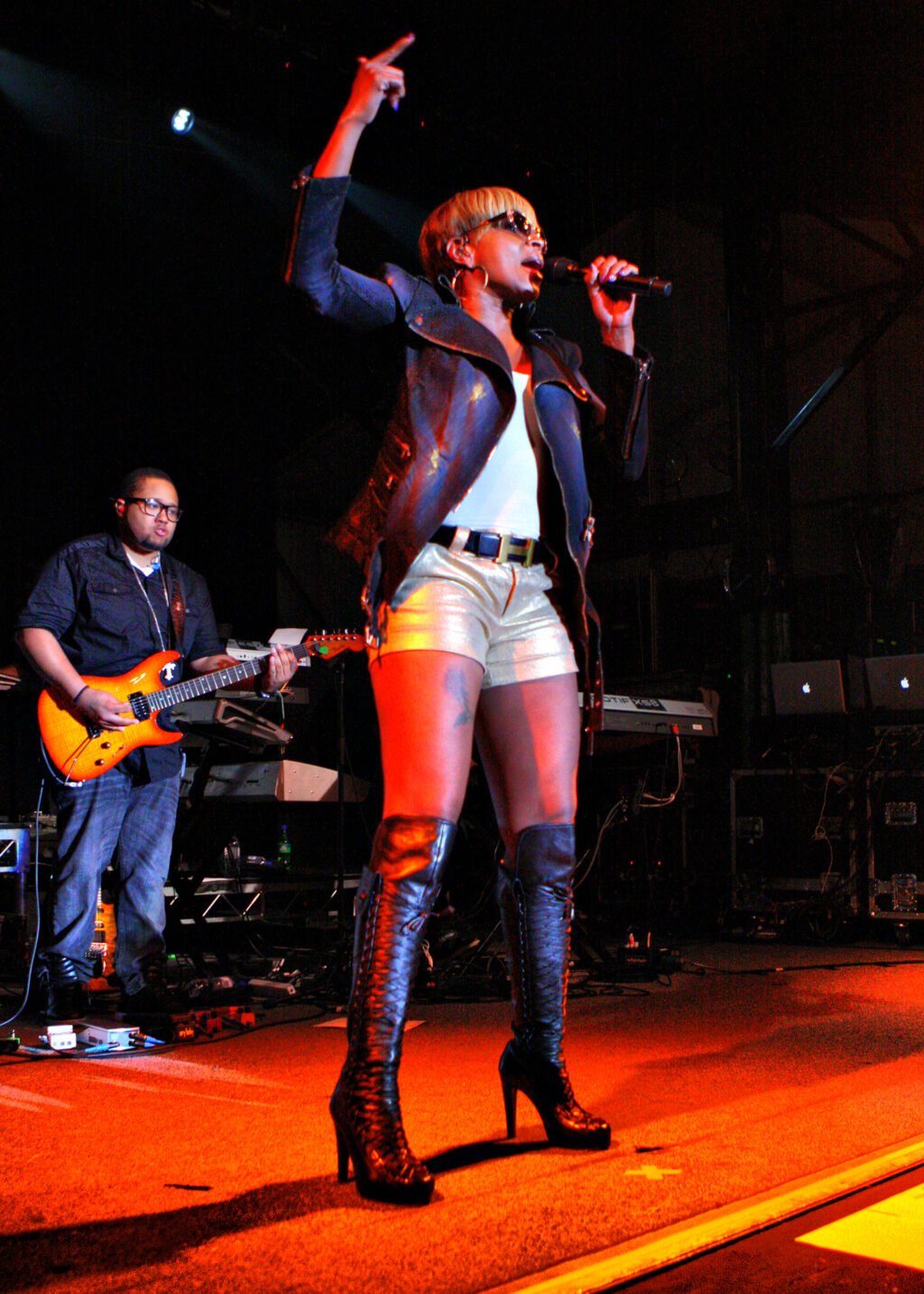
Photo: Eva Rinaldi via Wikimedia Commons (CC BY-SA 2.0)
Mary J. Blige did not fly to Las Vegas to get booed. And on Wednesday night, she let everybody in the room know it — in real time, on the mic, no filter.
Halfway through her show at Dolby Live on October 28, the Queen of Hip-Hop Soul just… stopped. Somebody in the crowd had been booing, loud enough for her to hear it, and Mary wasn’t about to sing over it like it hadn’t happened. She turned toward the noise and said what she thought. Plainly. In front of everyone.
According to footage from the night, Blige heard someone booing from the audience and refused to just sing over it. She called the person out directly, asking why anyone would pay good money for a ticket just to sit there and jeer. “You didn’t have to come here,” she told them, before adding that she hoped somebody would politely show them the door. The crowd, by all accounts, was fully on her side. Cheers rolled through the room as she spoke, and she took a second to apologise to the rest of the audience — the people who actually came to hear her sing.
Then, being Mary J. Blige, she got on with the show.
It was a small moment in the grand scheme of a Las Vegas residency, but it landed because it felt so true to who she has always been. Blige has never been the kind of star who smiles through disrespect and saves the real feelings for later. Her whole career has been built on saying the thing out loud, in song and in person, even when it is uncomfortable. Especially when it is uncomfortable.
The moment the music stopped
Look, hecklers at concerts aren’t new. But booing at a Mary J. Blige show? That’s a choice. A weird one. This isn’t a comedian testing out shaky new jokes in a club, or some pop act coasting on a backing track. A Blige concert is a full-body thing — people in that room have been carrying these songs around for decades. Heartbreak songs. Survival songs. The “I finally left him” songs. You don’t just heckle through that.
So when one voice cut through the room, it stuck out like a sore thumb. And Mary handled it the way only Mary would: she named it. Didn’t pretend she hadn’t heard it, didn’t let security quietly drag someone out while she smiled through the next chorus. She asked the obvious question — why pay real money for a ticket just to sit there and jeer? — and then gave the room back to the fans who’d actually come to hear her. Honestly? Fair enough.
The clip, which spread quickly online, shows a performer completely in command of her stage. She was not rattled. She was not pleading for approval. She sounded, frankly, a bit baffled that anyone would behave that way, and that bafflement is relatable. Most of us have sat near that person at a show — the one who talks through the ballads, films the whole set on a phone held up like a periscope, or treats a night out like a chance to audition their own opinions. Blige just said what the rest of the room was thinking.
Why the crowd had her back
Here is the thing about a Mary J. Blige audience: they are not casual. They are loyal in a way that few fanbases match. Many of them have been with her since 1992, when a young singer from Yonkers, New York, dropped “What’s the 411?” and changed the sound of R&B almost overnight. She sang like she had lived every lyric, because in many ways she had, and listeners heard themselves in it.
That bond only got deeper with “My Life” in 1994 — still, three decades on, one of the rawest records of its era. Mary wasn’t polishing her pain up for radio. She was putting it on the record, track after track, and asking you to sit in it with her. That’s why her concerts don’t feel like a greatest-hits parade. They feel like a reunion with an old friend who knows exactly what you’ve been through. When she sings “Real Love” or “Not Gon’ Cry” or “No More Drama,” the whole room sings back — not just the words, but the memories stuck to them. First breakups. Bad apartments. Better years.
A heckler in that room is not just interrupting a song. They are interrupting something people waited months to experience, paid real money to attend, and in some cases travelled for. No wonder the cheers for Blige were so loud. The audience was not just backing their favourite singer. They were protecting their night out.
There is also a simpler point here, and Blige made it herself: nobody forced that person to buy a ticket. Las Vegas has no shortage of other shows on any given night. If you do not want to be at a Mary J. Blige concert, the solution is genuinely easy. Do not go. Stay home. Watch something else. The idea of paying to sit in the dark and boo at a legend is, to put it kindly, a strange way to spend an evening.
A residency built on “My Life, My Story”
The Las Vegas show at the centre of all this is part of Blige’s residency “Mary J. Blige: My Life, My Story,” running at Dolby Live through February 2027. And honestly, the title says it all. Mary’s career has always blurred the line between the songs and the life behind them, and a residency gives her the room to tell that story properly — the highs, the rough patches, the reinvention, and the long, hard-won confidence that came after. Night after night, same stage, same city, fans flying in just for her.
People used to talk about Vegas residencies like they were where stars went to wind down. That idea is dead and buried. These days a residency is one of the biggest stages in music, and the artists who take one on are usually the ones with a catalogue deep enough to fill it. Mary qualifies about ten times over. Plus, let’s be real — touring non-stop is brutal at any age. A residency means a rhythm instead of a blur: a home venue, a settled production, and a crowd that comes to you. For fans it turns a concert into a trip. For Mary, it’s a victory lap that still sounds hungry.
Thirty-plus years of not backing down
Part of why Wednesday’s clip travelled so fast is that it felt like classic Mary. This is the same artist who, for 30-plus years now, has refused to sand her edges down. Her early records mashed hip-hop beats together with soul singing in a way nobody had quite pulled off before, and the industry quickly called her the Queen of Hip-Hop Soul. The nickname stuck because it was true — she wasn’t borrowing from either world, she lived in both.
The hits just kept coming. “Share My World.” “Mary.” “No More Drama.” Then “The Breakthrough” in 2005, which gave us “Be Without You” — one of those songs that still stops a room cold. Grammys piled up. Arenas sold out. In 2022 she stood on the Super Bowl halftime stage. In 2024 she went into the Rock & Roll Hall of Fame, which was really just the industry catching up with what fans had known forever.
And all the while she was building a second career as an actor, too. Her turn in 2017’s “Mudbound” got her an Oscar nomination for best supporting actress — plus another one for best original song, which is not a combo you see every day. Later she stole scenes as Monet Tejada on “Power Book II: Ghost,” playing a woman with steel in her spine and zero patience for nonsense. Sound familiar? Yeah. Wednesday night in Vegas was basically Monet energy, live on stage.
Her most recent album, “Gratitude,” arrived in 2024, and its title felt like a statement of intent. After everything — the fame, the struggles she has spoken about openly, the comebacks — Blige sounded like an artist at peace with her story and still hungry to tell it. That is the energy she brings to the Vegas stage, too. Not nostalgia for its own sake, but a living, breathing catalogue performed by someone who still means every word.
What happens next in Vegas
As for the heckler — well, they got their moment, just not the one they wanted. Instead of derailing the show, they handed Mary a clip that reminded everyone why she’s still here, still running rooms, and still unbothered about saying so. The rest of the audience got the night they paid for. The internet got a very Mary moment to pass around. And the residency rolls on through February 2027, for anyone who wants to see her properly. Cheering, that is. Not booing.
There’s a lesson in there for concertgoers, and it’s not complicated: artists can hear you. They always could, but now every phone is a camera and every moment can be online within minutes — so they can also answer you, in front of the whole room. So go to the show. Sing along. Dance badly. Cry during the ballad you’ve loved since high school. That’s what the night is for.
And if you can’t manage that? Mary said it best herself. You didn’t have to come at all.
For now, the Queen of Hip-Hop Soul is exactly where she belongs — on a Vegas stage, in full voice, entirely unbothered by anyone who thought a boo might knock her off her stride. It didn’t. Honestly, it never stood a chance.
Source: Just Jared