Keira Knightley Says Love Actually ‘Means Nothing’ to Her — and She Hasn’t Watched It in 23 Years
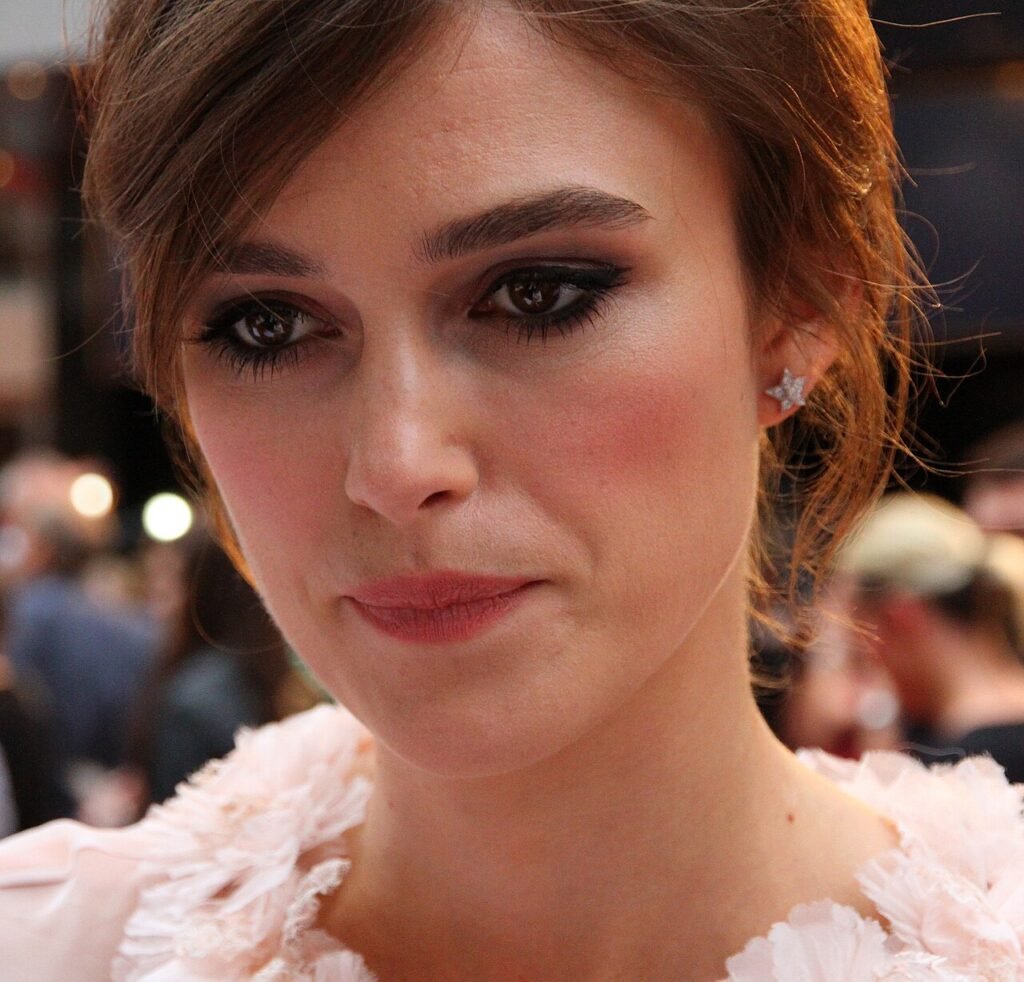
Photo: Paul Bird via Wikimedia Commons (CC BY 2.0)
Here’s a sentence nobody expected to hear this Christmas season: Keira Knightley has barely seen Love Actually. Not recently. Not a few years ago. Not since the night it premiered, when she was 18 years old and still technically a teenager.
The 41-year-old actress said it herself this week, while out promoting the second season of her Netflix spy thriller Black Doves, and she didn’t dress it up or soften it. Fans come up to her all the time with that look on their faces — you know the one, the half-smile, the raised eyebrows, the breath before a quote — and she has no idea what they’re about to say. She knows they’re quoting something. She just doesn’t know what.
“I have not watched Love Actually since the premiere, which was when I was 18,” Knightley told Heart in a new interview. “So, I think I’m the person that knows it the least of anybody. I know that people have a particular look on their face and then they say things to me and I know that means they’re quoting Love Actually but I don’t really know what it is. It means nothing to me.”
It means nothing to her. That’s the line that will follow this story around for the rest of the holiday season, and honestly, fair enough. Knightley was on the film for about a week. She was 17 years old. She has spent the 23 years since building one of the most interesting careers in British film, and the movie that a huge chunk of the public still associates her with most was, for her, a blip. A very short, very festive blip.
“I Haven’t Watched It Since the Premiere”
There’s something quietly funny about the way Knightley describes these encounters. She isn’t annoyed, exactly. She’s just… blank. A stranger walks up, face lit up, clearly delighted, and starts reciting a line from a film she saw once, more than two decades ago, at her own premiere. She can read the room well enough to know a quote is coming. The quote itself? Gone. Lost to time, or at least to whatever part of her brain files away old scripts.
“Because I was only on it for a week. It was a week when I was 17. So, I don’t remember it really,” she added. And that’s the part that makes the whole thing land. This isn’t an actress being difficult about a beloved film, or distancing herself from something she’s embarrassed by. It’s much simpler than that. She was a kid, she did a week’s work on an ensemble movie with about a dozen other stars, and then she moved on. The rest of the world just never did.
It helps to remember how young she actually was. Knightley was 17 when the cameras rolled and 18 when Love Actually hit cinemas in November 2003. She’d already turned heads in Bend It Like Beckham the year before, but she was still, by any normal measure, a teenager doing a job. The film’s director, Richard Curtis, cast her as Juliet, the newlywed at the center of the film’s most famous love triangle — married to Peter, played by Chiwetel Ejiofor, and quietly adored from afar by his best friend Mark, played by Andrew Lincoln.
She’s spoken before about having what she calls a “delete button” in her head when it comes to old roles, a habit of forgetting lines and scenes almost as soon as filming wraps. For most of her filmography, nobody notices. For Love Actually, a film people rewatch every single December like clockwork, it means she is permanently out of step with her own audience.
The Cue Card Scene She Still Calls Creepy
There is one scene she does remember, though. Of course there is. It’s the scene everyone remembers.
Mark turns up at Juliet’s door on Christmas Eve with a boombox playing carols and a stack of handwritten cue cards, telling her, without saying a word, that he’s in love with her. It’s been parodied, memed, recreated at weddings, and quoted in roughly a million Christmas cards. It is, for a lot of people, the scene that defines the whole film.
Knightley has called it “creepy” before, and she hasn’t changed her mind. Talking about it in a recent interview with the Los Angeles Times, she remembered the exact moment on set when Curtis tried to steer her reaction in a different direction.
“The slightly stalkerish aspect of it — I do remember that. My memory is of [director] Richard [Curtis], who is now a very dear friend, of me doing the scene, and him going, ‘No, you’re looking at [Lincoln] like he’s creepy,’ and I’m like [in a dramatic whisper], ‘But it is quite creepy.’ And then having to redo it to fix my face to make him seem not creepy,” she said.
“I mean, there was a creep factor at the time, right? Also, I knew I was 17. It only seems like a few years ago that everybody else realized I was 17.”
That last line is doing a lot of work. The scene reads very differently once you sit with the fact that the actress at the door was 17 and the actor holding the cards was 30. Knightley knew it at the time — she was the one saying it out loud on set — but the wider conversation only caught up years later, when audiences started rewatching the film with fresh eyes and asking harder questions about which of its storylines still hold up. The cue card scene, romantic as it’s framed, has become the film’s most debated moment, and Knightley’s own memory of filming it backs up the skeptics: she thought it was creepy then, and she thinks so now.
It also says something about her relationship with Curtis that she can tell this story with real affection. He’s “now a very dear friend,” in her words. She isn’t settling a score. She’s just telling the truth about a week she spent as a teenager on a film set, and letting the rest of us argue about what it means.
One Week at 17 — and a Career That Exploded
It’s easy to forget, with all the Christmas mythology attached to it, how small Knightley’s part in Love Actually actually was. She filmed for roughly a week. The movie is an ensemble piece, a web of interlocking stories spread across Hugh Grant’s prime minister, Emma Thompson and Alan Rickman’s crumbling marriage, Colin Firth’s writer falling for his Portuguese housekeeper, Liam Neeson’s widowed stepfather, and half a dozen others. Knightley’s storyline is one thread among many, and her screen time reflects that.
What happened next is the part nobody could have predicted — or maybe everybody could have. Within months of Love Actually‘s release, Knightley was Elizabeth Swann in Pirates of the Caribbean, and the trajectory from there was steep and fast: Pride & Prejudice in 2005, which earned her an Oscar nomination at 20, then Atonement, The Duchess, Anna Karenina, and an Oscar nomination for The Imitation Game in 2014. She became one of the defining British screen actresses of her generation, and she did it while the rest of the world kept coming back to her every December for a week’s work she did at 17.
That’s the strange math of her career. The film she remembers least is the one the public remembers most. Ask a casual moviegoer to name a Keira Knightley film and Love Actually is probably the first thing out of their mouth, ahead of the period dramas that actually defined her career and earned her the awards recognition. It’s not that the other work didn’t land — it’s that Christmas movies have a way of swallowing everything else. They come back every year, uninvited and unavoidable, while everything else fades into the streaming catalogue.
There’s a certain freedom in her honesty about it, though. Plenty of actors would play along, trot out a favorite line, pretend they rewatch it with the family every year. Knightley has never really been that kind of celebrity. She’s always been blunt about the parts of fame she finds odd, and this is just the latest example. She doesn’t owe the film a performance 23 years later, and she clearly isn’t going to give one.
Black Doves and Life After the Rom-Com
The reason she’s talking about any of this right now is Black Doves, her Netflix spy thriller, which is back for a second season. It’s about as far from a Richard Curtis Christmas movie as you can get: Knightley plays Helen Webb, a wife, mother, and longtime spy for a shadowy organization, caught between her double life and the people she’s supposed to protect. The first season was a hit for Netflix, and the second picks up the story with the stakes even higher.
It’s a good reminder of where she is now. At 41, Knightley has settled into the kind of career most actors would kill for — prestige television, serious film roles, and the freedom to pick projects that actually interest her rather than chasing whatever’s biggest. She has talked openly over the years about stepping back from the relentless pace of her twenties, about choosing work that fits around her family, about not needing to be everywhere at once.
Black Doves fits that pattern perfectly. It’s a grown-up thriller with a complicated woman at its center, the kind of role that would have been unimaginable for the 17-year-old standing in a doorway holding cue cards. And it’s the project that has her doing press rounds, which is how a throwaway question about a 23-year-old Christmas movie turned into the most talked-about quote of the week.
Why the Film Still Owns Christmas Anyway
Here’s the thing, though: Knightley’s indifference hasn’t dented the film’s grip on the holiday season one bit, and it never will. Love Actually is, for better or worse, a permanent fixture. It airs on television every December, it tops streaming charts every year, and its lines have entered the language in a way few films ever manage. People don’t just watch it — they quote it, argue about it, rank its storylines, defend it, and pick it apart, year after year after year.
Some of that affection is nostalgia, pure and simple. The film came out in 2003, which means an entire generation grew up watching it as a Christmas ritual, and rituals are hard to break. Some of it is the cast, a once-in-a-generation ensemble that would be impossible to assemble today. And some of it is the film’s strange, messy sincerity — its willingness to be sentimental in a way that modern romantic comedies mostly avoid.
But the film has also become a yearly argument, and that might be the real secret to its staying power. Is the cue card scene romantic or creepy? Is Hugh Grant’s prime minister storyline charming or absurd? Does the film hold up at all? Those debates are part of the tradition now, as much as the opening montage at Heathrow Airport. Knightley’s comments feed directly into that argument, and they’ll be quoted right alongside the film’s own dialogue for the next few Decembers at least.
There’s a pleasing irony in all of this. The actress who knows the film least has just given its fans something new to talk about — a fresh line for the annual debate, delivered by the person at the center of the scene everyone argues about most. She may never watch it again. She may never learn the quotes. But she’s just made sure that this Christmas, when the film comes up at dinner tables and in group chats, her name will be in the conversation one more time.
So if you run into Keira Knightley this December, maybe skip the quotes. She won’t know what you’re talking about, and she told you so herself. Just wish her a happy Christmas, ask her about Black Doves, and let Love Actually belong to the rest of us — which, after 23 years, it pretty much does anyway.
Source: Just Jared