
FIFA’s Ruling Explained: The Leandro Paredes 10-Match Ban and Argentina’s World Cup Fallout
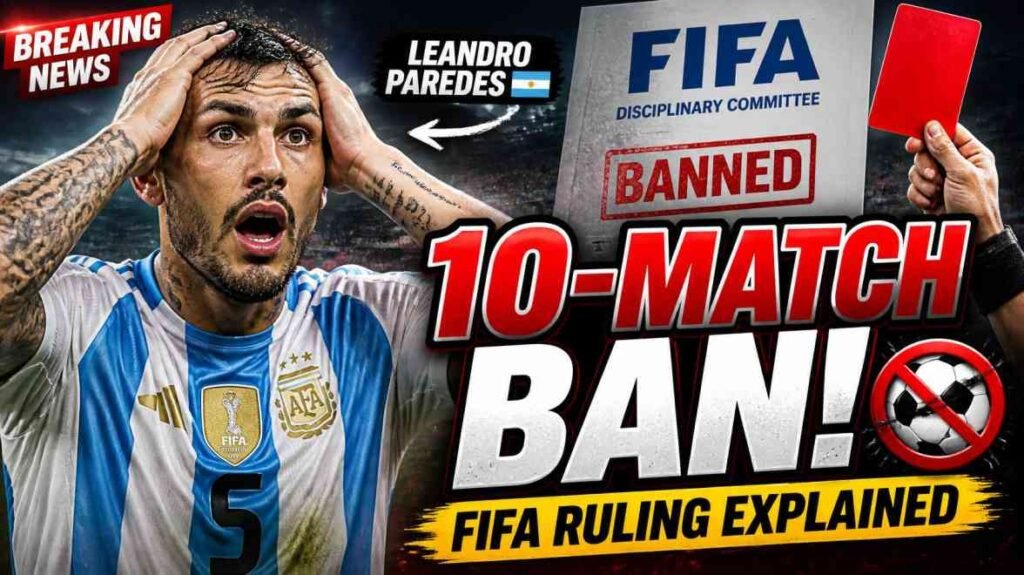
More than a month after Spain beat Argentina 1-0 in the World Cup final, FIFA has finally handed down its punishment — and it’s a heavy one. On Friday, August 21, the Leandro Paredes 10-match ban was confirmed alongside fines and suspensions for three other Argentina figures and Spain’s Gavi, closing out one of the ugliest post-match scenes in recent tournament history.
What Actually Happened on the Pitch
The chaos broke out seconds after Ferran Torres scored Spain’s extra-time winner in New Jersey on July 19. As Spanish substitutes rushed the pitch to celebrate, Argentina defender Nahuel Molina collided with Rodri, and things spiraled from there. Paredes grabbed Spain’s Eric García by the throat, then shoved Gavi to the ground. He was shown a red card in the moment — later wiped from FIFA’s records once the formal disciplinary process took over.
FIFA opened its investigation on July 29, charging Paredes with three separate counts of assault. That’s the backbone of the Leandro Paredes 10-match ban: not one incident, but a pattern the disciplinary committee treated seriously enough to rank it among the harshest World Cup sanctions ever issued, alongside Luis Suárez’s ban for biting Giorgio Chiellini in 2014.
The Full List of Sanctions
Paredes wasn’t alone in facing consequences. Here’s how FIFA broke it down:
- Leandro Paredes — 10-match ban, $90,000 fine (three assault charges)
- Nahuel Molina — seven-match ban, $90,000 fine (two assault charges, one unsporting behaviour charge)
- Thiago Almada — one-match ban, $30,000 fine (unsporting behaviour)
- Roberto Ayala, Argentina’s assistant coach — three-match ban, $30,000 fine (assault); he’d already apologised publicly for his part in the melee
- Gavi (Spain) — one-match ban, $30,000 fine (unsporting behaviour), which will cost him Spain’s Nations League clash against England at Wembley on September 26
Because the Leandro Paredes 10-match ban runs through FIFA’s official national-team calendar, and Argentina has no competitive fixtures scheduled until 2027, it effectively wipes out an entire year of his international career — mostly friendlies, but a brutal stretch to sit out all the same.
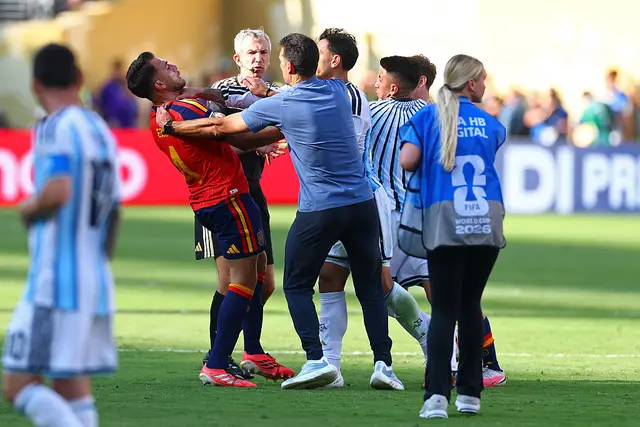
Photo Credit: Chris Brunskill/Fantasista/Getty Images
Argentina Fined Over the Falklands Banner Too
Separately, the Argentine Football Association was fined $321,000 for a mix of offenses that go beyond the final itself. The biggest piece traces back to the semi-final win over England, when players unfurled a banner reading “Las Malvinas Son Argentinas” — “The Falklands Are Argentine” — a clear breach of FIFA’s rule against using matches for non-sporting demonstrations. The rest of the fine covers team misconduct and discriminatory chanting from Argentine fans during games against Cape Verde, Egypt, Switzerland, England, and Spain, according to the AFA’s own statement.
The punishment doesn’t stop at money. Argentina has to play its next two home matches at 50% stadium capacity, with anti-discrimination messaging built into the seating plan — though one of those two matches has actually been suspended, along with $100,000 of the overall fine. Another $100,000 has to go toward a FIFA-approved anti-discrimination program within six months.
Worth noting: back when the banner first went up, UK politicians including Lib Dem leader Ed Davey pushed for the players involved to be barred from playing in the final. FIFA let them play, and no individual player faced punishment over the banner specifically — the sanction landed on the federation instead.
Argentina Plans to Appeal
The AFA isn’t taking this quietly. In a statement, the federation confirmed it will formally request the grounds behind FIFA’s rulings so it can file appeals — first through FIFA’s own Appeals Committee, and, if that fails, potentially all the way to the Court of Arbitration for Sport. All parties have ten days to request that reasoning before any appeal can move forward.
Paredes, for his part, avoided commenting on his role in the brawl in the immediate aftermath. His Instagram statement thanked Argentina and the national team without acknowledging what triggered the FIFA investigation in the first place. He’s since returned to club football with Boca Juniors, where he was involved in yet another on-pitch flashpoint earlier this month, kicking the ball at a downed opponent during a domestic match.
Why It Matters Beyond One Bad Night
The Leandro Paredes 10-match ban lands in the same conversation as some of the sport’s most notorious disciplinary cases — not just Suárez’s bite, but Croatia’s Josip Šimunić, who received an identical 10-game ban back in 2013 for leading fans in a chant tied to a wartime fascist regime. Whether Argentina’s appeal changes any of these numbers remains to be seen, but for now, the fallout from that July final is still being written a month after the last whistle blew.