C.S. Lewis’s Family Reportedly “Very Upset” Over Meryl Streep Playing Aslan in Greta Gerwig’s Narnia
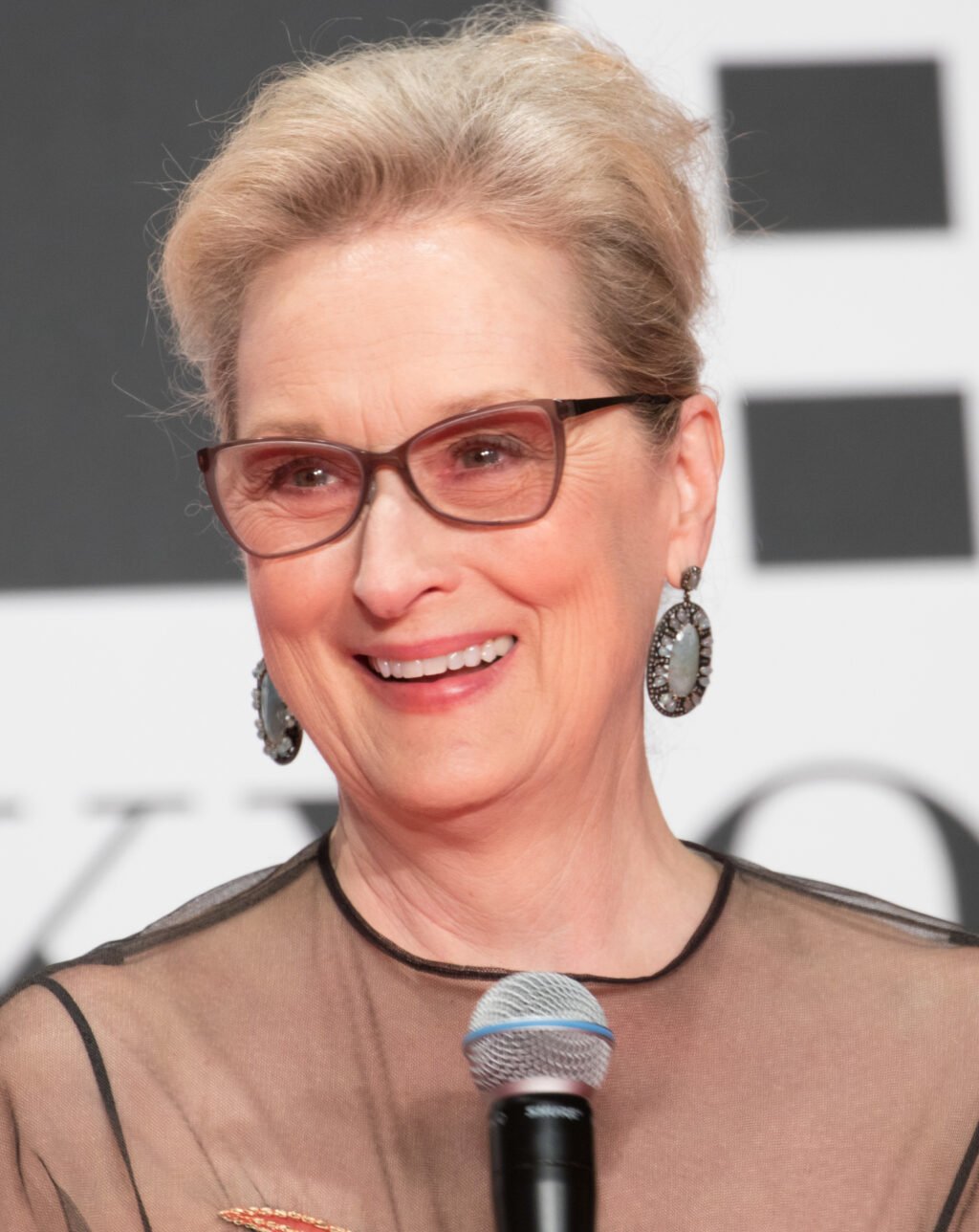
Photo: Dick Thomas Johnson via Wikimedia Commons (CC BY 2.0)
The lion is out of the bag — and not everyone’s roaring with approval.
This week, Movieguide founder Dr. Ted Baehr told CBN News that members of C.S. Lewis’s family are “very upset” over the decision to cast Meryl Streep as the voice of Aslan in Greta Gerwig’s upcoming Netflix adaptation of Narnia — and that the family is now attempting to “regain control” of The C.S. Lewis Company, the organization that oversees the literary and media rights to Lewis’s work.
“They’re very concerned about it, because they’re worried that it’s going to, you know, destroy the brand,” Baehr said. He isn’t some drive-by commentator, either. Baehr once ran the Episcopal Radio and Television Foundation when it produced the animated version of The Chronicles of Narnia: The Lion, the Witch and the Wardrobe for CBS back in 1979, and he’s personally tied to the family — Lewis’s 80-year-old stepson, Douglas Gresham, is the godfather of Baehr’s daughter-in-law. Baehr says he recently visited Gresham’s son, Tim Gresham, in Sydney, Australia, and came away convinced the displeasure runs deep.
“Theologically this is a tremendous heresy and it’s a tremendous problem,” Baehr said. “C.S. Lewis would be turning over in his grave. His family is very upset about it, and I think we should be upset about it.”
The confirmation came last week, when Gerwig revealed to Empire that Streep — 77 years old, three Oscars deep, and arguably the most decorated actress of her generation — would voice the great lion in Narnia: The Magician’s Nephew, the first film in Netflix’s multi-movie deal with The C.S. Lewis Company, signed back in 2018.
And just like that, one of the most beloved characters in children’s literature got pulled into the culture wars.
Why this casting has struck such a nerve
For casual moviegoers, swapping a voice actor might sound like small potatoes. For Narnia devotees, it’s anything but. Aslan isn’t just a talking lion — he’s the Christ figure at the beating heart of the whole series, the character who dies and rises again in The Lion, the Witch and the Wardrobe. Lewis himself was adamant that Aslan was not merely a symbol but the embodiment of “the second person of the Trinity,” as he might appear in a world of talking animals and living trees. The lion is male. Deliberately, theologically male.
So when word got out that Streep would lend him — or her, now — her voice, the reaction online was swift and scorching. Some fans labeled the change “blasphemy.” Others coined a nickname that’s equal parts snark and sorrow: “Translan.” Conservative influencer Mike Winger wrote that the move “runs counter to the entire purpose of the story,” adding, “C.S. Lewis would have a fit and rightly so.” Lutheran commentator Liam McCollum said Lewis “would’ve hated Gerwig’s deconstruction and subversion of Aslan,” and noted the irony that the final Narnia book is literally about an Aslan impostor.
That last book is The Last Battle, and Baehr leaned into it hard. In it, a manipulative ape named Shift tricks a gullible donkey named Puzzle into parading around in a lion skin, selling the talking animals on a false, ultimately demonic “Aslan” called Tashlan. Online, “Tashlan” has now been recycled as the nickname for Streep’s version. Baehr also argued that The Magician’s Nephew is Narnia’s Genesis — a creation story — and in a creation story, he said, “you have to have God as a Father. You can’t have God being voiced as a woman.”
“If God is a Father, he is not Meryl Streep pretending to be a father,” Baehr said. “He’s not trans. He’s the Father, he’s our Father. He loves us, He adopts us.”
Religion professor Leslie Baynes of Missouri State University, who wrote a whole book on Lewis and the Bible, offered the calmer academic version of the same diagnosis: for many evangelical fans, Lewis is essentially a saint. They have a lifelong relationship with his work. Tinkering with it feels, to them, like tampering with something sacred.
Gerwig’s case for Meryl
None of this, presumably, comes as a surprise to Greta Gerwig. When she talked to Empire about the choice, she described it as a deliberate, almost fated one. She wanted, she said, “someone who was profound but not pretentious, who had gravitas but not morose self-seriousness — someone who could communicate depth and pathos as well as joy and delight.”
She also had an age in mind: someone over 70, old enough to carry what she called “a wisdom of experience,” but with the kind of fresh wonder you’d expect from a child. And then there was the talent bar. “One of the greatest actors to ever do it,” she said. “That list is not a long one.”
She’s got a point about the list. Streep has been nominated for more Academy Awards than anyone in history, and she just stepped back into Miranda Priestly’s impossibly sharp heels for The Devil Wears Prada 2. The collaboration also reunites her with Gerwig, who directed her in 2019’s Little Women. Gerwig is coming off Barbie, one of the biggest box office phenomena of the decade, which means Netflix has effectively handed one of the most valuable literary franchises on earth to a filmmaker with enormous cultural capital.
Baehr, for his part, says he actually spoke with Gerwig after she signed on to direct, and he doesn’t paint her as a villain. He believes, he said, that she “has a heart for God.” But he questions whether she has the biblical worldview to pull the adaptation off faithfully, pointing to Barbie as evidence of a feminist undertone rather than, in his words, “a biblical portrait of relationships.”
Gerwig’s own religious life is its own subplot. She grew up Unitarian Universalist and has said she envisions her Magician’s Nephew as “a rock opera,” telling interviewers that “David Bowie saved my life. Paul McCartney saved my life… Narnia is literally a world made out of music. It is a world sung to life by Aslan.” In a 2018 interview, she also said she feels “uncomfortable around ‘Jesus Christ is my Lord and Savior stuff’ — I find that creepy,” while adding that she goes to church every Sunday. It is, to put it gently, a complicated résumé for the custodian of evangelical America’s favorite children’s books.
What this Narnia will actually be
Setting aside the roaring — sorry — the film itself is a genuinely big deal for Narnia fans, and not only because of Aslan’s voice. The Magician’s Nephew, written in 1955, has never been adapted for film or television before, which is a little remarkable given how often the other books have been tackled. It’s chronologically the first Narnia story: two children, Digory Kirke and Polly Plummer, meddle with magic rings, accidentally wake the evil witch Jadis, and end up watching Aslan sing the entire world into existence.
The cast around Streep is stacked. Emma Mackey plays the White Witch, Daniel Craig is the bumbling Uncle Andrew, Carey Mulligan is Mabel Kirke, David McKenna is Digory, and Beatrice Campbell is Polly. One casting choice has raised barely an eyebrow by comparison: Kobna Holdbrook-Smith, the British actor born in Ghana, plays Frank the Cabby, the ordinary London cab driver Aslan anoints as Narnia’s first king — a role described in the novel as a white, working-class Englishman.
The film is slated to hit theaters in February 2027 before landing on Netflix that April, with a reported budget of around $280 million. For context, the Disney trilogy of the 2000s — where Liam Neeson voiced Aslan — pulled in roughly $1.5 billion worldwide. Netflix isn’t just making a movie; it’s trying to launch the definitive Narnia for a generation that never met Neeson’s lion. And the books, for what it’s worth, have sold more than 100 million copies since 1950. That’s a lot of childhood memories to handle with care.
A family legacy — and what’s actually at stake
Back to the family, because that’s the new development here, and it’s the one with real teeth. Baehr’s claim isn’t just that relatives of C.S. Lewis are upset — it’s that they’re trying to claw back control of The C.S. Lewis Company itself. He stopped short of details, trailing off in the interview: “They did a big campaign. They’re trying to regain control of The C.S. Lewis Company in order that—” before cutting himself off. “Things happen,” he added, cryptically.
Whether a rights battle materializes or fizzles, the comment reveals how high the stakes feel for the people guarding Lewis’s legacy. This isn’t the first time a Gerwig choice has been read as ideological meddling by skeptics — Baehr lumped it in with the dust-up over Christopher Nolan’s The Odyssey and its casting of Lupita Nyong’o as Helen of Troy — but the religious dimension makes the Narnia case more incendiary. Phil Vischer, the creator of VeggieTales, captured the bewilderment of the middle ground: “If Meryl Streep is Aslan… is Aslan a female lion with a mane? Or a male lion with a woman’s voice? I’m not thrilled with either possibility.” Still, he said, he’s withholding judgment until he sees the film.
Not everyone is scandalized, of course. Author Mary Pezzulo, a lifelong Narnia fan who calls The Magician’s Nephew her favorite of the books — “the scariest and also the funniest” — admitted she’s uneasy about Gerwig’s changes, including reports that the story’s timeframe has been shifted to the 1950s. But she pushed back on the outrage, too, asking a question that cuts through the noise: why is it fine to turn Jesus into a lion, but offensive to let a woman speak for him? “You can turn Jesus into an animal, and it doesn’t take away from his dignity,” she said. “But you think it’s offensive to turn Jesus into a woman? That’s just a really nasty way to think about women.”
So here we are, more than a year before the movie even opens, and the fight over a voice performance has already become a proxy war over faith, gender, legacy, and who gets to decide what C.S. Lewis’s stories mean in 2027. Douglas Gresham, Lewis’s stepson, has spent decades stewarding his stepfather’s work — and now, at 80, he may be gearing up for one more battle over it.
Whatever happens with the rights company, one thing is certain: when Aslan finally opens his mouth in that February 2027 theater, half the audience will be listening for majesty, and the other half will be listening for heresy. It’s a no-win audition, really. But then again, that’s what happens when you cast the most famous lion in literature — and hand him, or her, to Meryl Streep.
Source: Christian Post