Jack Antonoff Still Sings the Love Songs He Wrote for Margaret Qualley — and He’s Not Sorry

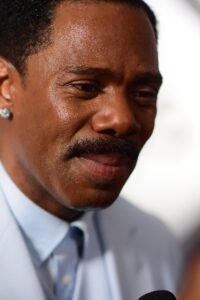
Photo: Alex Lockett via Wikimedia Commons (CC BY-SA 4.0)
Most breakup advice boils down to the same thing: burn the photos, delete the playlist, stop torturing yourself. Jack Antonoff has gone the other way entirely. Night after night, in front of thousands of people, he still sings the love songs he wrote for Margaret Qualley — and he has no plans to stop.
It is, by his own admission, a strange place to be. The 42-year-old Bleachers frontman and hit-making producer split from the 32-year-old actress in July, after nearly three years of marriage. The songs, though, are still on the setlist. The feelings in them are still real. And Antonoff, talking to The Guardian in a new interview published on Sunday, October 25, says that tension is exactly the point.
“It’s actually been really beautiful,” he said of performing those songs now. Not easy, exactly. Not comfortable, either. But beautiful — a word he kept coming back to, like he was still working out what it meant even as he said it.
The setlist question he almost answered differently
Antonoff did not pretend the decision was simple. When the marriage ended, he sat with a question most performers in his position would quietly dodge: do you keep singing about someone who is no longer your wife?
He thought about changing the setlist. Seriously thought about it. The songs in question are not vague, could-be-about-anyone pop songs, either. They are specific, tender, unmistakably about a particular person at a particular time in his life. Singing them after a split means standing on a stage and letting a crowd watch you mean every word of something that now belongs to the past.
In the end, his gut made the call for him. “I sat long and hard with it and thought, ‘If I change the setlist…'” he said, “and in my gut there was a unanimous jury that said, ‘No, this is the deal. The deal I’ve made with my audience is that I’m going to tell you honestly how I feel and I’m going to risk at any moment having to stand behind it for f—ing ever.'”
That is a hell of a deal to make with yourself. Most pop stars are in the business of reinvention — new era, new haircut, new story. Antonoff has built his whole career on the opposite instinct: write it down when you feel it, say it out loud, and then live with it forever. The breakup did not change the contract. If anything, it proved why he made it in the first place.
Why he refuses to rewrite the past
“I don’t rewrite the past, I have no shame about the things I’ve said,” Antonoff told The Guardian. “My life has been dedicated to making it impossible for me to rewrite the past, because I’m standing there, singing about how I felt during the good times, so when the bad times hit I can’t look myself in the mirror and pretend that those times didn’t exist.”
Read that twice, because it is the whole philosophy in one breath. He is not arguing that the marriage was perfect, or that the songs were prophecies, or that love lasts forever if you just sing about it hard enough. He is saying something smaller and braver: those good times happened. Pretending otherwise would be the real lie.
“I would rather live through something publicly than even escape it privately,” he added. And honestly? You believe him. This is a man whose songwriting has always read like a diary with the pages left open — messy, funny, oversharing, sometimes too honest for his own good. Privacy was never really on the table.
There is also something generous in how he frames the concerts now. He talked about fans coming together, knowing what a song is about, knowing what it must feel like for him to sing it now, and holding all of that at once. “Anyone could relate to the terrible sadness and pain, but there’s a great power to it also,” he said. A breakup song, sung by the person living it, in a room full of people who have lived their own version of it — that is not awkward. That is the whole reason live music exists.
The songs themselves — and the video that stings a little now
Among the tracks Antonoff has kept in rotation are “dirty wedding dress” and “you and forever,” both from Bleachers’ latest album, Everyone for Ten Minutes. The second one carries an extra layer of ache: Qualley appeared alongside Antonoff in its music video, which came out in February — months before news of their separation became public.
Watching that video now feels different, and Antonoff knows it. That is presumably why he did not duck the subject when a fan brought it up at a show. At Bleachers’ Los Angeles concert on September 15, someone shouted out a request for “Let’s Get Married,” a 2017 Bleachers track. Antonoff laughed it off on stage. “Read the news, brother,” he told the fan.
It was a joke, but it was also a line in the sand. He was not going to pretend, and he was not going to be precious about it either. Humour has always been his pressure valve — the same instinct that lets him write a devastating chorus and then undercut it with a joke in the next breath.
That September moment was his first public nod to the split. The Guardian interview, published October 25, is the first time he has really talked about it at length. Three months after the separation was confirmed, he finally had something to say that was not a punchline.
A love story that moved fast — and a split handled quietly
Antonoff and Qualley began dating in 2021 and married in August 2023 in New Jersey, in a wedding that felt very on-brand for both of them: stylish, a little offbeat, and full of famous friends. She wore a white dress and, in photos that circulated afterwards, looked like she was having the time of her life. He looked, frankly, like a man who could not believe his luck.
Their separation was confirmed in July 2026. Qualley’s representative later denied speculation that cheating or trust issues were behind the breakup, and neither Antonoff nor Qualley has publicly confirmed a specific reason for the marriage ending. In an era when celebrity splits usually arrive with a statement, a source, and three competing narratives before lunch, the relative quiet around theirs has been notable.
Maybe that quiet is why the Guardian interview landed the way it did. Fans had questions, and for months the only answer was a setlist that refused to change. Now there is an explanation, and it is a good one: he is not clinging to the songs, and he is not performing grief for applause. He is just refusing to lie about what he once felt.
What this says about Antonoff the artist
It helps to remember who Jack Antonoff is outside this marriage. Before Bleachers, there was fun. and Steel Train. As a producer, he has shaped some of the biggest pop records of the last decade, working with Taylor Swift, Lorde, Lana Del Rey, and St. Vincent, among others. He has won Grammys, filled arenas, and built a reputation as the guy other artists call when they want a song to actually feel like something.
That reputation rests on honesty. His Bleachers records are full of New Jersey references, family grief, anxiety, joy, and the kind of specific detail — a street name, a car, a conversation — that makes a song feel lived-in rather than manufactured. If he started quietly dropping every song that became inconvenient, the whole project would collapse. Fans would notice. He would notice first.
Qualley, for her part, has had her own remarkable run. The daughter of actress Andie MacDowell, she broke out in The Leftovers, stole scenes in Quentin Tarantino’s Once Upon a Time in Hollywood, carried the Netflix limited series Maid to critical acclaim, and more recently turned heads in the body-horror hit The Substance. She is not a footnote in his story, and he has never treated her like one. The songs are love songs because the relationship mattered — and, in his telling, it still does, just differently now.
The crowd knows — and that is the point
Here is the part that might be hardest for outsiders to understand: the audience is in on it. When Antonoff sings those songs now, nobody in the room thinks he is pretending to still be happily married. They know. He knows they know. And that shared knowledge, he says, is what makes the shows work.
“For people to come together, to know what I write a song about, to know how that must feel for me now, to know what that song means to you as an audience member, to just hold it all and sort of celebrate,” he said. Celebrate is an interesting word choice there. Not mourn. Not endure. Celebrate — the songs, the feelings, the fact that something real happened and left something worth singing about.
It is a grown-up way to handle a breakup in public, and a rare one. No subtweeting, no diss track, no carefully worded statement about “loving each other deeply and choosing to part as friends.” Just a man, a microphone, and the same songs, sung with the same conviction, in a different chapter of his life.
There will be people who find it uncomfortable. There will be fans who cry during those songs now in a way they did not before. There will probably be another shouted request at another show, and another joke to deflect it. But the setlist, it seems, is staying put.
Antonoff made a deal with his audience a long time ago: he would tell them honestly how he felt, even if it meant standing behind those feelings forever. On a stage in 2026, singing love songs about an ex-wife to a crowd that knows exactly what they are hearing, he is keeping that deal. That is not denial. That is integrity, with a backbeat.
Source: Just Jared